
Men basic wardrobe essentials are the small set of clothes that make getting dressed easy, look good in most situations, and stop you from buying random items you never wear.
If your closet feels full but you still rotate the same few pieces, it’s usually not a “style” problem, it’s a foundation problem. A strong base wardrobe does two things: it reduces decision fatigue on busy mornings, and it makes every new purchase easier because it has something to pair with.
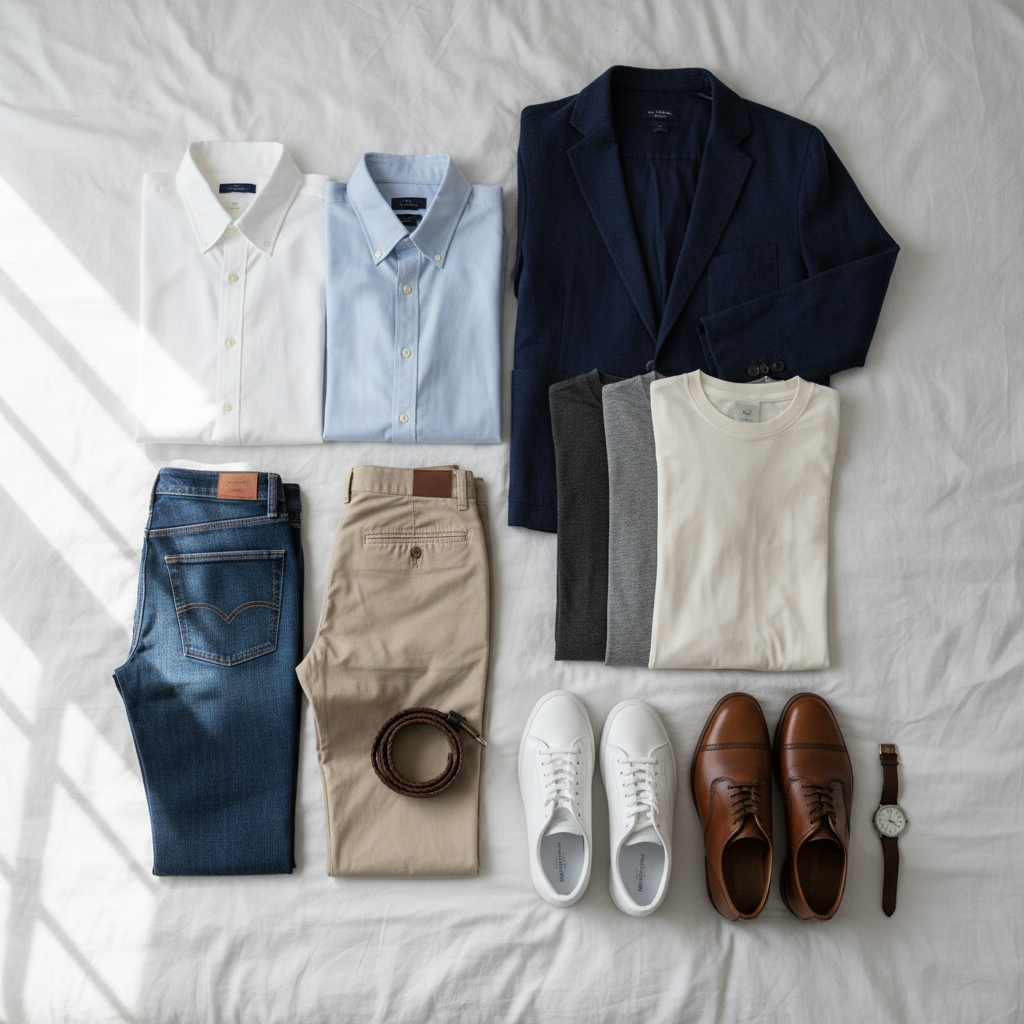
This list is meant for real life in the U.S.: commuting, casual weekends, date nights, business-casual offices, and the occasional dressier event. I’ll keep it practical, with fit notes, simple color guidance, and a quick way to decide what you actually need first.
What “essentials” really means (and what it doesn’t)
An essential is a piece you can wear often, across seasons, without feeling like you’re repeating the same outfit. It’s usually neutral, easy to layer, and forgiving across different settings.
It is not a trend item, not the “perfect” version you’ll wear someday, and not a replacement for personal taste. If you love bold prints, great, keep them, just build the base first so those fun pieces don’t feel like costume clothing.
- Essentials prioritize versatility: one shirt, multiple outfits.
- Essentials prioritize fit: a $40 shirt that fits beats a $200 shirt that doesn’t.
- Essentials prioritize repeat wear: if you won’t wear it twice a month, it’s probably not foundational.
The men basic wardrobe essentials list (the core pieces)
Think of this as your “starter roster.” You can expand later, but these cover most daily needs.
Tops
- 3–5 crewneck T-shirts (white, heather gray, navy/black): midweight fabric, not see-through, sleeves that don’t flare.
- 2 casual button-downs (oxford cloth in white and light blue, or one oxford + one chambray): works untucked with jeans or tucked with chinos.
- 1–2 polos (navy, charcoal, or white): an easy upgrade from a tee without feeling “dressed up.”
- 1 versatile sweater (merino crewneck or cotton knit): layers over a tee or under a jacket.
- 1 overshirt or lightweight jacket shirt: adds structure in spring/fall without bulk.
Bottoms
- 1 dark wash jeans (no heavy distressing): clean enough for dinner, casual enough for daily wear.
- 1–2 chinos (khaki and olive or navy): business casual staple, travel-friendly.
- 1 casual short (7–9 inch inseam for many guys, but adjust for height): avoid overly cargo-heavy pockets unless that’s your thing.
Outerwear
- 1 casual jacket (denim jacket, bomber, or chore coat): your everyday layer.
- 1 smarter jacket (unstructured blazer or clean topcoat): for dates, meetings, events.
- 1 weather layer (rain shell or insulated jacket depending on region): buy for your actual climate, not an “ideal” one.
Shoes
- 1 clean sneaker (white or off-white leather or minimal canvas): pairs with jeans and chinos.
- 1 casual shoe (brown suede chukka or loafer): adds polish without going formal.
- 1 dress shoe (brown cap-toe oxford or derby): weddings, interviews, nicer dinners.
Basics that quietly matter
- Underwear and socks you don’t hate: comfort affects confidence more than people admit.
- 2 belts (brown, black): match roughly to shoe color, close enough is fine in many situations.
- 1 simple watch (or none): not required, but a clean accessory can finish a look.
A simple “buy less, wear more” color strategy
If you want the closet to mix easily, keep the base colors boring on purpose, then add personality in one or two places.
- Start with neutrals: white, gray, navy, olive, black, denim.
- Pick one accent color: burgundy, forest green, rust, or a muted blue, then repeat it across 1–2 items.
- Limit loud patterns: stripes are usually safe; big prints are harder to re-wear.
According to GQ... men’s style guidance often returns to neutral foundations and strong fit because it increases outfit combinations without extra purchases.
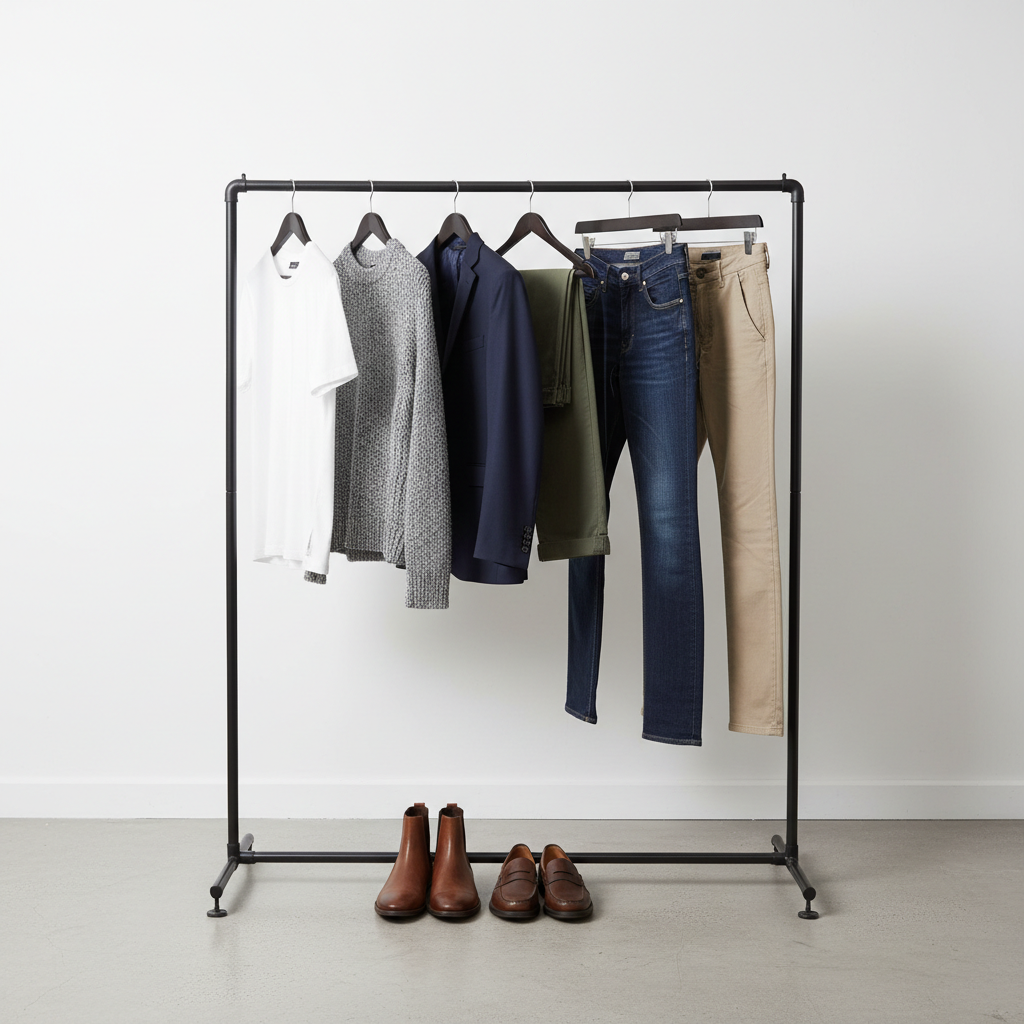
Fit rules that make cheap clothes look better
Most “my outfit looks off” moments come down to proportion. You don’t need tailoring for everything, but you do need a few non-negotiables.
- Shoulders first: tees, shirts, jackets should end near the shoulder bone, not sliding down the arm.
- Shirt length: if you want to wear it untucked, it should cover the belt area but not swallow your thighs.
- Pants break: a slight break (small fold at the shoe) works for many; stacks of fabric usually look sloppy.
- One silhouette per outfit: if the top is roomy, keep pants more streamlined, and vice versa.
When in doubt, prioritize comfort in the waist and shoulders, then adjust length. A simple hem or sleeve adjustment often gives the biggest payoff per dollar.
Quick self-check: what do you actually need first?
Before you buy anything, do a 10-minute audit. This is how you avoid owning five versions of the same “almost right” item.
- You struggle on weekdays: you likely need better shirts and chinos, plus one smart jacket.
- You look too casual on dates: you probably need a clean sneaker upgrade, a casual shoe, and one button-down that fits.
- You travel for work: focus on wrinkle-resistant shirts, dark jeans or chinos, and layers that pack well.
- You live in tees and jeans: keep that, just add one step-up option (polo or oxford) and one smarter outer layer.
- You’re replacing worn-out basics: prioritize underwear, socks, and shoes, because discomfort shows.
Also check your laundry rhythm. If you do laundry weekly, owning 3–5 tees makes sense; if you do it every two weeks, the “essentials” count should scale up.
How to build your essentials in 3 practical phases
Buying everything at once sounds efficient, but it usually creates mistakes. The better move is phased upgrades, each phase should make outfits noticeably easier.
Phase 1: Fix the daily uniform (1–2 weeks)
- Replace your most-worn tee and your most-worn pants with versions that fit well.
- Add one pair of clean sneakers if yours look tired.
- Choose one layer: overshirt, denim jacket, or bomber.
Phase 2: Add “presentable” options (month 1)
- Add a well-fitting oxford button-down.
- Add chinos in a neutral color.
- Add one casual shoe (chukka/loafer) for an easy upgrade.
Phase 3: Cover events and weather (month 2+)
- Add a dress shoe and a belt that matches closely.
- Add a blazer or topcoat that works with jeans and chinos.
- Add the right weather layer for your region.
Essential checklist table (a realistic starter set)
Use this as a baseline, then adjust for your job, climate, and how often you go out.
| Category | Item | Suggested Qty | Notes |
|---|---|---|---|
| Tops | Crewneck T-shirts | 3–5 | Neutral colors, midweight fabric |
| Tops | Oxford button-downs | 1–2 | White/light blue covers most needs |
| Bottoms | Dark wash jeans | 1 | Minimal distressing for versatility |
| Bottoms | Chinos | 1–2 | Khaki + olive/navy is a safe mix |
| Outerwear | Casual jacket | 1 | Denim, bomber, or chore coat |
| Outerwear | Smart jacket | 1 | Unstructured blazer or topcoat |
| Shoes | Clean sneakers | 1 | Keep them bright and minimal |
| Shoes | Dress shoes | 1 | Brown oxford/derby handles most events |
Common mistakes that waste money (and how to avoid them)
The most expensive wardrobe is the one full of “almost.” If you want men basic wardrobe essentials to actually work, avoid these traps.
- Buying duplicates before fixing fit: two mediocre shirts don’t equal one great-fitting shirt.
- Over-indexing on black: black can look sharp, but head-to-toe black is less forgiving in daylight and can feel harsh for some skin tones.
- Ignoring shoes: worn soles and creased uppers downgrade every outfit, even if your clothes are solid.
- Confusing formal with “nice”: you rarely need a full suit day-to-day, but you often need a step above a hoodie.
- Chasing one perfect brand: brands vary by item; a great tee brand may make average pants.
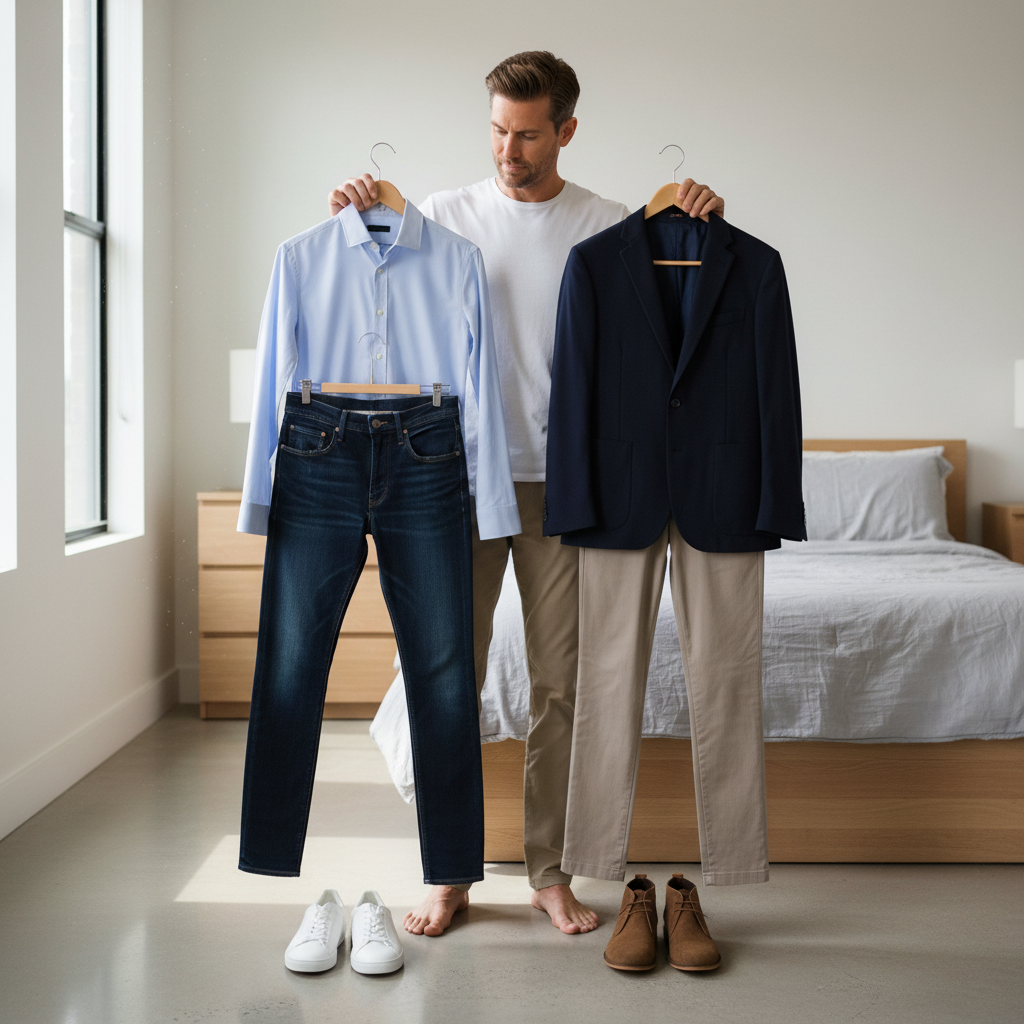
Key takeaways (save this)
- Build around repeatable outfits, not one-off looks.
- Fit beats price in most everyday situations.
- Neutrals first, accent later keeps mixing effortless.
- Phase your purchases so every add-on has something to pair with.
Conclusion: a wardrobe that works without overthinking
If you keep your men basic wardrobe essentials tight and intentional, you get a closet that looks better with less effort, and shopping turns into replacing gaps instead of chasing vibes. Pick one phase to start this week, choose the item you wear most, upgrade it for fit and versatility, then let that new “standard” guide everything else.
If you want an easy next move, take three outfits you like, note what they have in common, then buy only pieces that support that pattern.
FAQ
How many items should a basic men’s wardrobe have?
Many guys do well with 25–40 wearable items excluding workout gear, but it depends on climate and laundry habits. The better metric is whether you can make 10–14 outfits you’d actually wear.
What are the best colors for men basic wardrobe essentials?
Neutrals like navy, gray, white, olive, and dark denim mix easily and look appropriate in most settings. If you like color, add one accent you repeat across a couple pieces.
Do I need a suit as an “essential”?
Not always. If you attend weddings, interviews, or formal events a few times a year, a suit can be worth it, but many people get more use from a blazer plus chinos and a great shirt.
Are white sneakers still a good basic?
Usually yes, because they pair with jeans and chinos without looking heavy. The key is keeping them clean and minimal; overly chunky styles are less versatile for some wardrobes.
What’s the fastest way to upgrade my outfits without buying much?
Improve fit and footwear first. Hem pants to the right length, replace beat-up sneakers, and add one layer like an overshirt or casual jacket.
Should I buy slim fit or relaxed fit basics?
Buy what matches your body and comfort, then aim for clean lines rather than a label. In many cases, “tailored” looks better than either extreme.
How do I know when to tailor something?
If shoulders fit and the fabric feels good, tailoring length in sleeves or pants often makes sense. If shoulders are off, tailoring may not be worth it, and you’re better off trying a different size or cut.
Want a simpler way to put this into action?
If you’re trying to build a reliable rotation but keep getting stuck on what to buy next, it can help to share your climate, dress code, and budget, then map your essentials to a small set of repeatable outfits, so you’re not guessing item by item.