
women transitional outfit fall spring dressing gets tricky fast because the day can feel like two seasons at once, cold wind at 8 a.m., sun at lunch, then a temperature drop by dinner. The goal is not owning more clothes, it’s building outfits that flex with layers, fabrics, and shoes that can handle surprise weather.
If you’ve ever changed outfits twice, carried a bulky coat all afternoon, or felt “too winter” in photos, you’re not alone. Transitional style is really a planning problem, you need a few reliable formulas that work for errands, office days, travel, and weekends.
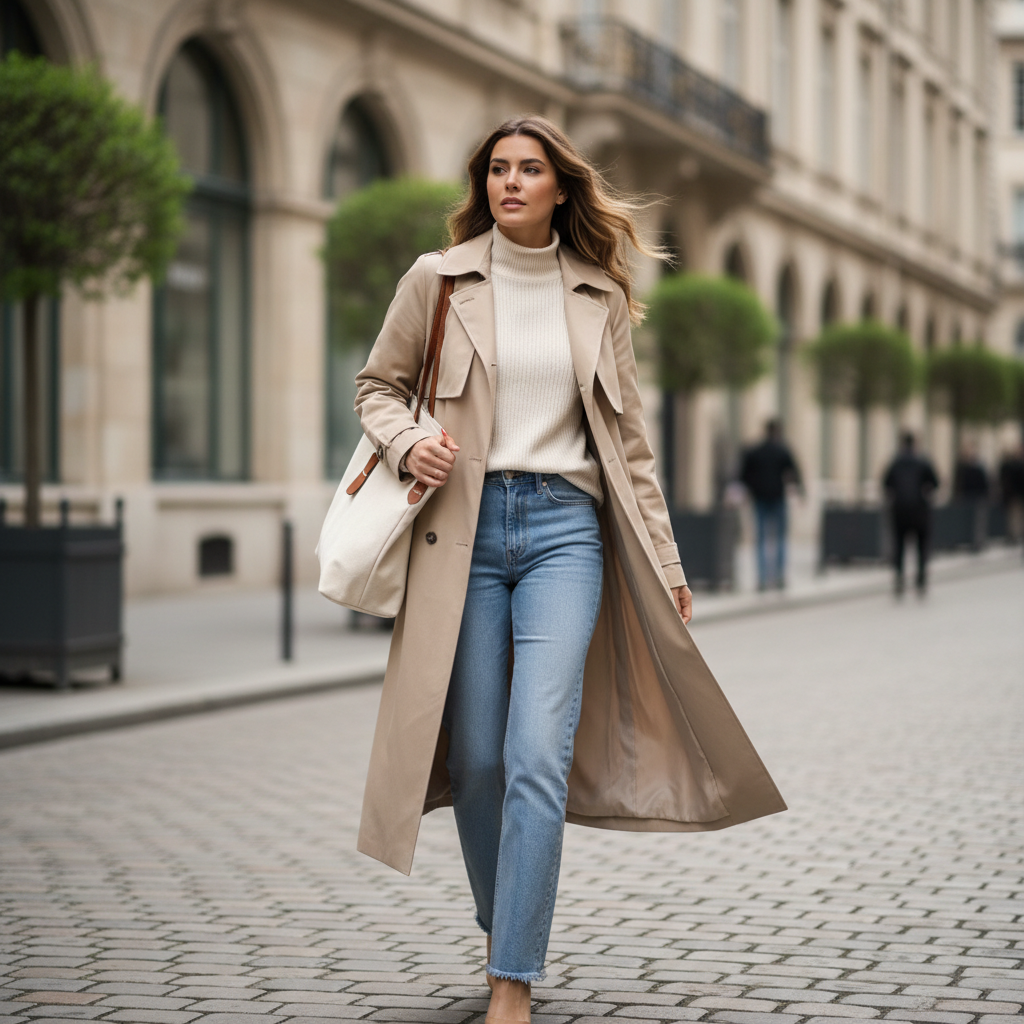
One common misconception is thinking “transitional” means buying special seasonal pieces. In real closets, it usually means remixing what you already own, then adding a couple of gap-fillers like a light jacket, a mid-weight knit, and shoes that tolerate wet sidewalks.
Why transitional outfits feel hard (and what’s really happening)
Most outfit frustration in shoulder seasons comes from a few predictable issues, not a lack of style sense.
- Temperature swings: cold mornings and warm afternoons punish single-layer outfits.
- Wind and rain: 55°F with wind can feel much colder, and damp air makes fabrics cling or lose structure.
- Indoor heat vs. outdoor chill: offices, cafes, and cars run warm, so heavy outerwear becomes annoying to carry.
- Color timing: you may want lighter colors for spring, but still need coverage and warmth like fall.
According to National Weather Service (NWS), wind chill can make conditions feel colder than the thermometer reading, which is why a “not-that-cold” forecast still ends up uncomfortable in the morning.
A quick self-check: what kind of transition are you dressing for?
Before you copy an outfit from Pinterest, pin down your actual use case. This short checklist saves time and helps you choose the right layer strategy.
- Daily swing: Is your day a 20°F spread between morning and afternoon?
- Precipitation: Do you need rain protection or just warmth?
- Dress code: Office, casual, travel, school pickup, weekend brunch?
- Walking vs. driving: A walking commute needs more wind and shoe planning.
- Cold sensitivity: If you run cold, you’ll need one extra “thin warm” layer.
If you check “daily swing” and “walking commute,” prioritize removable layers and weather-friendly shoes. If it’s mostly indoor, focus on a polished mid-layer (cardigan, blazer, fine knit) and a light outer layer you can take off quickly.
The 3-layer formula that works for most women
For women transitional outfit fall spring days, the most reliable approach is a simple three-part build: a breathable base, a warm-but-not-bulky mid layer, and a protective outer layer. You can remove one layer without the outfit falling apart.
1) Base layer: comfortable, not clingy
- Ribbed tee, fitted long-sleeve, bodysuit, lightweight turtleneck
- Fabric tip: cotton blends, modal, and thin merino often regulate temperature well
2) Mid layer: the “style” layer
- Cardigan, sweater blazer, denim jacket, fine-gauge knit, lightweight sweatshirt
- Fit rule: aim for clean lines so you can remove the outer layer and still look intentional
3) Outer layer: weather insurance
- Trench, utility jacket, light puffer, leather jacket, unlined wool coat (mild days)
- Look for: pockets, a collar, and enough room for the mid layer
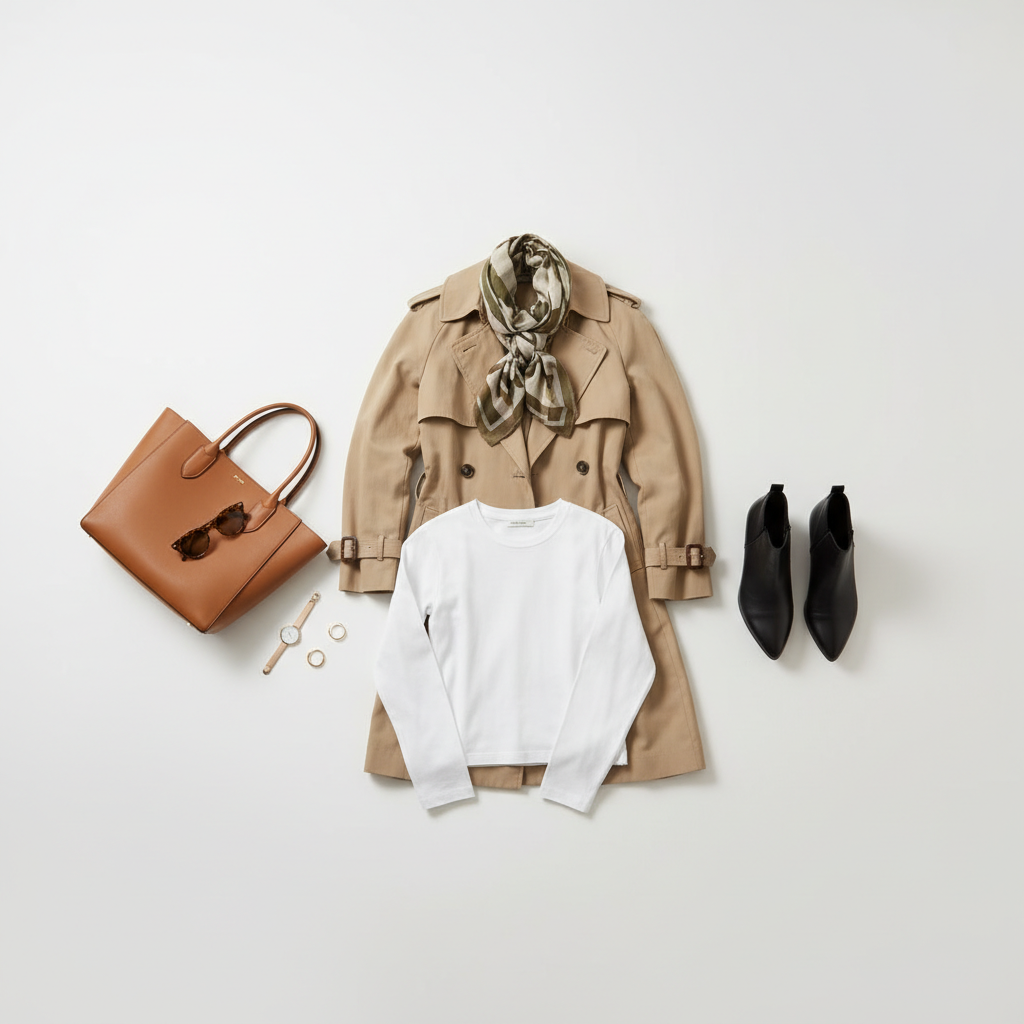
Capsule pieces that earn their closet space
You do not need a huge capsule wardrobe, but a handful of pieces repeatedly solve the “what do I wear” question in both fall and spring.
- Light trench or raincoat: makes casual outfits look finished, helps in drizzle
- Mid-weight knit: fine-gauge sweater, cardigan, or sweater blazer
- Straight-leg jeans or ankle pants: work with boots and sneakers
- Midi skirt: easy to warm up with boots and a knit, easy to lighten with sneakers
- Weather-smart shoes: ankle boots, loafers, leather sneakers, water-resistant options
- One “bridge” accessory: a lightweight scarf or cap that adds warmth without bulk
According to CDC, hypothermia can happen in cool temperatures, especially with wind or wet clothing, so if your area gets rainy and breezy, prioritizing a protective outer layer is more than a style choice. If you have health concerns or you’re outdoors for long periods, it’s wise to consult a medical professional about safe cold exposure.
Outfit formulas you can repeat (work, casual, and weekend)
When you’re tired, formulas beat creativity. Here are repeatable combinations that usually photograph well and still feel practical.
Polished casual (errands, coffee, school pickup)
- Long-sleeve tee + cardigan + straight jeans + ankle boots
- Tank + oversized button-down + cropped jacket + sneakers
Office-friendly (business casual)
- Fine knit + ankle pants + trench + loafers
- Button-down + sweater blazer + midi skirt + boots
Weekend elevated (dinner, date, events)
- Slip skirt + lightweight turtleneck + leather jacket + heeled boots
- Black jeans + knit top + long coat + pointed flats
Where many people get stuck is footwear. If sidewalks are wet or the forecast is uncertain, choose shoes that can handle a little mess, then keep the rest of the outfit lighter to avoid feeling “heavy.”
A practical planning table: what to wear by temperature range
Use this as a starting point, then adjust for wind, rain, and your own comfort. If you’re building a women transitional outfit fall spring rotation, this table helps you stop overthinking.
| Outside temp (approx.) | Best base | Mid layer | Outer layer | Shoes |
|---|---|---|---|---|
| 35–45°F | Long-sleeve or thin turtleneck | Knit sweater or sweater blazer | Light puffer or wool coat | Boots (prefer water-resistant) |
| 45–55°F | Long-sleeve tee | Cardigan or denim jacket | Trench or utility jacket | Ankle boots or loafers |
| 55–65°F | Tee or lightweight knit | Optional: button-down or light cardigan | Optional: trench for wind/rain | Sneakers, loafers |
| 65–75°F | Short sleeve, tank with coverage layer | Button-down as a topper | None, or packable layer | Sneakers, flats, sandals (region-dependent) |
Common mistakes that make transitional outfits feel “off”
- One heavy item, everything else light: a thick coat over a thin dress can look unbalanced and feel sweaty indoors.
- Ignoring fabric behavior: some acrylic knits trap heat, some thin jerseys cling when damp, test what you own on a real day.
- Color whiplash: head-to-toe winter darks can feel heavy in spring, but head-to-toe pastels can feel wrong in fall. Mix one seasonal color with neutrals.
- Choosing shoes last: shoes should be decided early because they drive pant length, sock choice, and coat vibe.
- No “carry plan”: if your outer layer comes off, have a tote or crossbody that can handle a scarf or light jacket.
Actionable styling tips: make it look intentional, not “in-between”
These are small moves, but they change the whole impression.
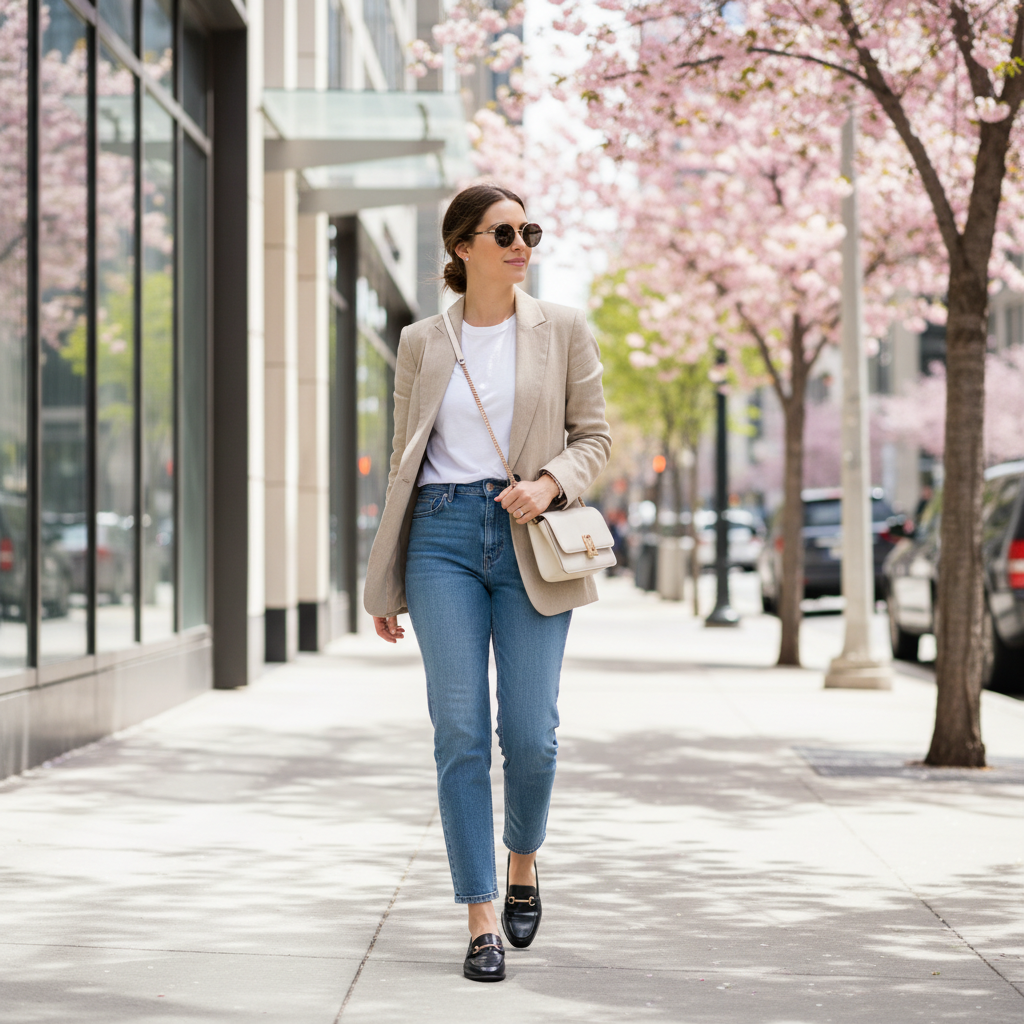
- Pick one anchor: trench, leather jacket, blazer, or a standout knit, then keep the rest simple.
- Use “bridge” colors: cream, camel, olive, navy, denim, and gray work across seasons without trying too hard.
- Control proportions: if the outer layer is long, keep the base more fitted, if the jacket is cropped, add a longer top or high-rise bottom.
- Accessory warmth: a thin scarf, sunglasses, and a structured bag read seasonal without adding bulk.
- Packable backup: a light layer that folds small saves you when the forecast is wrong.
Key takeaways: build around layers, choose shoes early, and keep a small set of repeatable formulas. That’s the easiest path to outfits that feel good and look consistent in photos.
When it helps to get more specific advice
If you deal with frequent rain, long outdoor commutes, or temperature-sensitive health concerns, generic outfit rules may not be enough. In those cases, consider asking a local stylist, a knowledgeable retail associate, or a medical professional for safety guidance if cold exposure is a concern. Also, if you’re between sizes or struggle with fit, a tailor can be a surprisingly high-impact step, even for casual pieces like jeans and coats.
Conclusion: a simple way to start tomorrow
If your closet already feels full, start with one repeatable women transitional outfit fall spring formula: a comfortable base, a mid layer that looks good on its own, and an outer layer that matches your weather. Then decide shoes before you leave the house, not after you’ve tried on three jackets.
Pick two outfits from the formulas above, hang them together as “grab-and-go” sets, and adjust after one real wear. The first week is the only part that takes effort, after that it becomes muscle memory.
FAQ
- What is a women transitional outfit fall spring, exactly?
It’s an outfit built to handle day-to-night changes by relying on removable layers and season-bridging fabrics, so you stay comfortable without changing clothes. - How do I dress for 45°F mornings and 65°F afternoons?
Use a breathable base, add a mid layer like a cardigan, and top with a trench or light jacket that’s easy to carry once it warms up. - Are ankle boots still okay in spring?
In many U.S. regions, yes. Choose sleeker shapes and lighter colors, and pair with cropped jeans or a midi skirt to keep the look fresh. - What fabrics work best for in-between weather?
Lightweight knits, cotton blends, denim, and thin merino often work well. If you overheat easily, avoid very thick synthetic knits. - How can I look “spring” without freezing?
Swap in lighter colors, add a trench, and keep warmth in the mid layer. Pastel tops under a neutral coat usually feel seasonal but practical. - What if it rains a lot where I live?
Prioritize a water-resistant outer layer and shoes with decent traction. Many people also keep a compact umbrella and a bag that can handle damp items. - Do I need a whole new capsule wardrobe for transition seasons?
Usually no. Most closets already have workable pieces, the difference comes from pairing them into repeatable formulas and adding one or two true gaps.
If you’re building a small wardrobe refresh for unpredictable weeks, it can help to start with one dependable outer layer and two mid layers that mix with your existing jeans, skirts, and shoes, that’s often the most “effort-to-impact” upgrade without overbuying.