
Oversized outfits styling gets tricky when you love the comfort but keep feeling “swallowed” in photos or in real life. The good news is balance is less about being thin or tall, and more about making a few proportion choices on purpose.
If you’ve ever tried a big blazer or wide-leg jeans and thought, “Why does this look cool on everyone else,” you’re not alone. Oversized pieces exaggerate volume, so small details like hem length, waist placement, and shoe shape suddenly matter a lot.
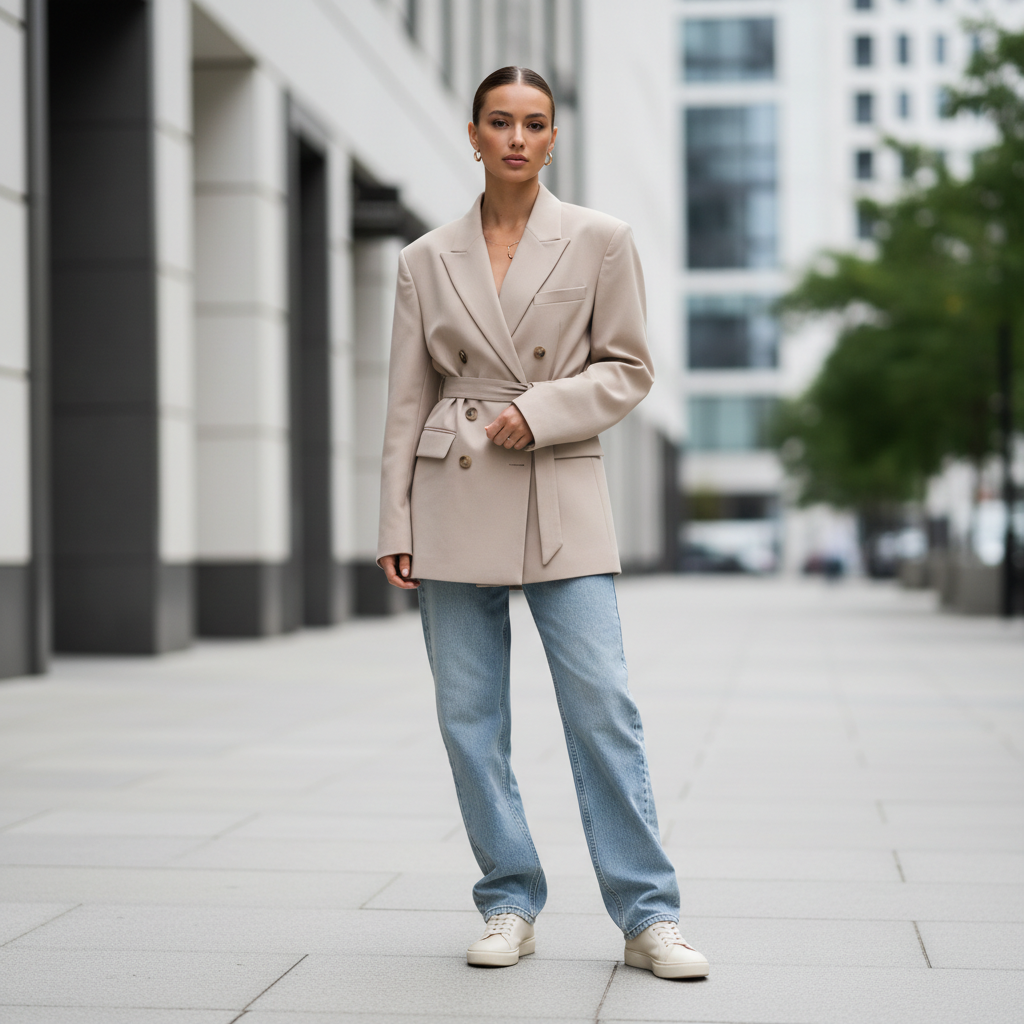
What this guide does is keep it practical: quick self-checks, repeatable outfit formulas, and a few “don’t waste your time” warnings. You’ll finish with a clearer sense of what to tweak so oversized reads intentional, not accidental.
Why oversized looks “off” (and why it’s rarely the clothes)
Most “this looks sloppy” moments come from proportion conflicts, not from the item being too big. A few common culprits show up again and again.
- Too much volume in the same zone: a boxy top plus a very full bottom can work, but it usually needs structure, a defined waist, or a strong shoe.
- Unclear waist placement: when the eye can’t find where your torso ends, the outfit reads like one big shape.
- Wrong hem lengths: long top + long outer layer + long pants often stacks heaviness at mid-body and calves.
- Shoe mismatch: chunky shoes can look great, but paired with certain wide hems they may shorten the leg line.
- Fabric behavior: some knits collapse, some cottons balloon, some synthetics cling, you can’t style them the same way.
According to Vogue..., oversized tailoring and relaxed silhouettes are a recurring runway theme, but editorials often rely on tailoring tweaks and intentional styling to keep the look sharp. In real life, you can borrow the same idea without a runway budget: you’re creating contrast on purpose.
A quick self-check: which “balance problem” do you have?
Before you buy more pieces, diagnose what’s happening. Stand in front of a mirror, take one quick photo, and answer these honestly.
- You feel wider than expected: likely too much width at shoulders + hips at the same time, or the top hem hits the widest point of your hip.
- You feel shorter: hems breaking at the ankle, low-rise volume, or shoe + pant opening combo cutting the leg line.
- You look “pajama-ish”: fabric is too soft everywhere, or you’re missing one structured element (belt, crisp collar, structured bag).
- You look top-heavy: shoulder width emphasized with no counterweight (sleeker bottom or open neckline).
- You look bottom-heavy: wide legs with long outerwear, or bulky shoes with wide hems.
Pick one primary issue, not five. Oversized outfits styling becomes much easier when you fix one major proportion decision instead of “tweaking everything.”
The core rules: proportion, structure, and “anchor points”
You don’t need strict fashion math, but you do need a few reliable rules that hold up across bodies, budgets, and seasons.
1) One big, one fitted (or at least clean)
When one piece brings volume, the other piece should bring clarity. That can mean fitted, straight, cropped, or simply less drapey.
- Oversized button-down + straight jeans
- Big hoodie + bike shorts or slim joggers
- Roomy sweater + midi slip skirt (skim, not cling)
2) Create an anchor point
An anchor point tells the eye where to look: waist, neckline, wrists, ankles, or a strong shoe line.
- Waist: half-tuck, belt, cropped layer, or higher-rise bottom
- Neckline: open collar, V-neck, or visible collarbone
- Wrists: pushed-up sleeves, bracelet stack, watch
- Ankles: slight crop, cuff, or shoe that shows a clean break
3) Make at least one element structured
Structure doesn’t have to mean stiff. It means the garment holds a shape rather than collapsing.
- Swap a floppy tote for a structured shoulder bag
- Choose a blazer with a defined shoulder line
- Add a crisp layer like a poplin shirt under a chunky knit
Outfit formulas that almost always look balanced
If you want plug-and-play ideas, these formulas are reliable starting points. Adjust the details to your taste, but keep the “shape logic.”
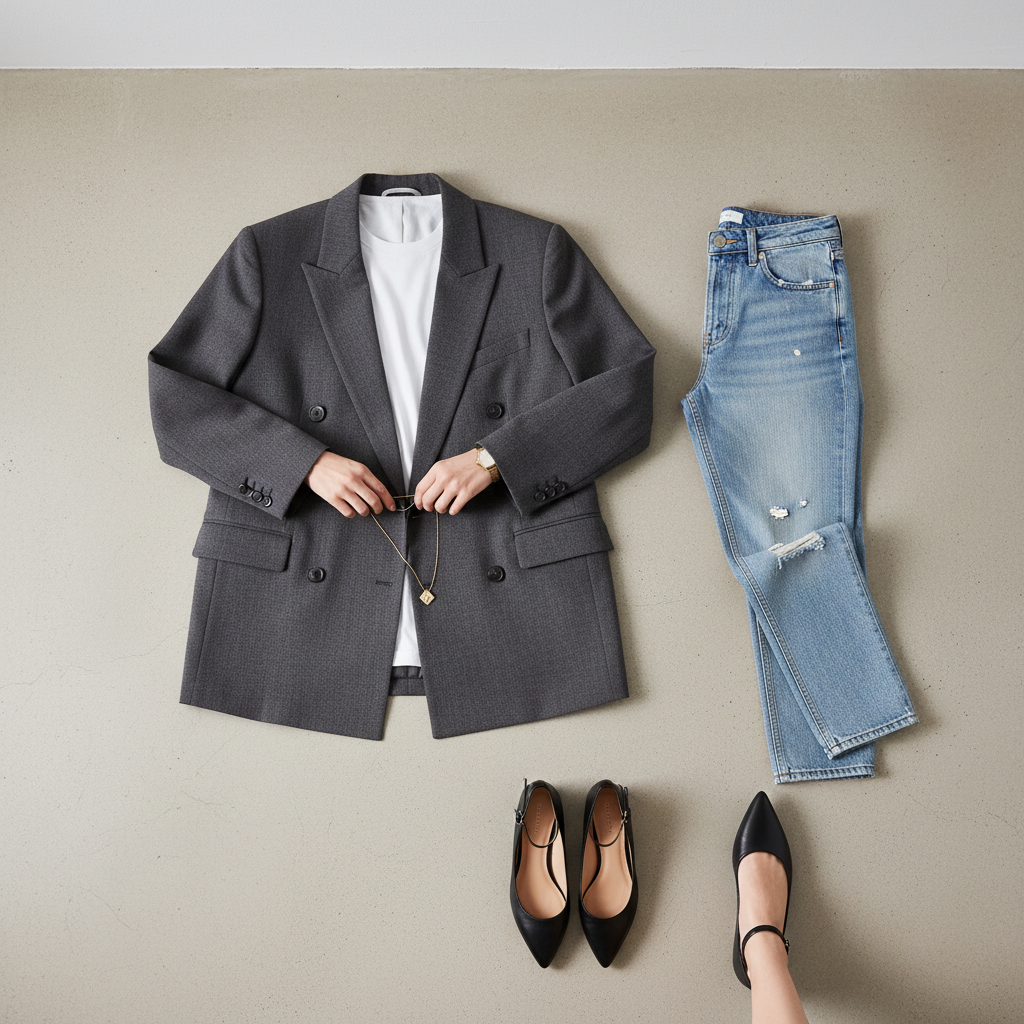
Formula A: Oversized blazer + simple base + clean shoe
- Top: oversized blazer worn open
- Base: fitted tank/tee or a lightweight knit
- Bottom: straight jeans or tailored shorts
- Shoes: loafers, pointed flats, sleek sneakers
This is the easiest way to do oversized outfits styling for work-casual because the blazer provides structure and the base layer prevents bulk stacking.
Formula B: Big sweater + slip skirt + minimal accessories
- Sweater: slightly cropped or front-tucked
- Skirt: bias-cut slip or satin midi that skims
- Shoes: ankle boots or refined sneakers
- Extras: one “polished” item, like a leather bag
The skirt moves, the sweater relaxes, and the polished item keeps it from drifting into lounge territory.
Formula C: Oversized shirt + fitted short + statement shoe
- Shirt: oversized button-down, sleeves rolled
- Bottom: bike shorts or fitted shorts
- Shoes: chunky sandals, retro sneakers, or tall socks + sneakers
This reads intentional because the silhouette has a clear “long over short” message.
Formula D: Wide-leg pants + slim/clean top + defined waist
- Pants: wide-leg, higher rise typically helps
- Top: fitted tee, bodysuit, or tucked knit
- Waist: belt or visible waistband detail
If wide-leg pants feel intimidating, start here. The top stays quiet, the pants get to be the point.
Fabric and fit: small choices that change everything
Two oversized items can look completely different depending on fabric weight and where seams land. When shopping your closet or trying something on, check these fast.
| Item | What to look for | What usually causes imbalance |
|---|---|---|
| Oversized blazer | Defined shoulder, sleeves you can push up | Droopy shoulder seam, too-long hem past mid-thigh |
| Big knit sweater | Some structure in the ribbing, not overly stretchy | Fabric collapsing at waist/hips, sleeves hiding hands |
| Wide-leg pants | Higher rise, clean drape, hem that matches your shoe | Pooling at ankle, very low rise with extra volume |
| Oversized tee | Thicker cotton, neckline that holds shape | Thin fabric clinging, stretched collar |
According to CFDA..., fit and quality construction are key signals that make garments look polished. In practice, that often means paying attention to shoulders, hems, and fabric recovery, even when you want a relaxed vibe.
Step-by-step: how to balance an oversized look in 5 minutes
If you’re getting dressed and something feels off, run this quick sequence. It’s simple, but it saves time because you’re changing the highest-impact detail first.
- Step 1: Pick the hero piece (only one): big jacket, huge pants, oversized shirt.
- Step 2: Clean up the base: choose a simpler, less bulky second piece.
- Step 3: Add one anchor point: half-tuck, roll sleeves, show ankle, open neckline.
- Step 4: Decide the shoe “energy”: sleek to elongate, chunky to emphasize streetwear, but make it deliberate.
- Step 5: Add one structured accessory: belt, bag, or a sharper outer layer.
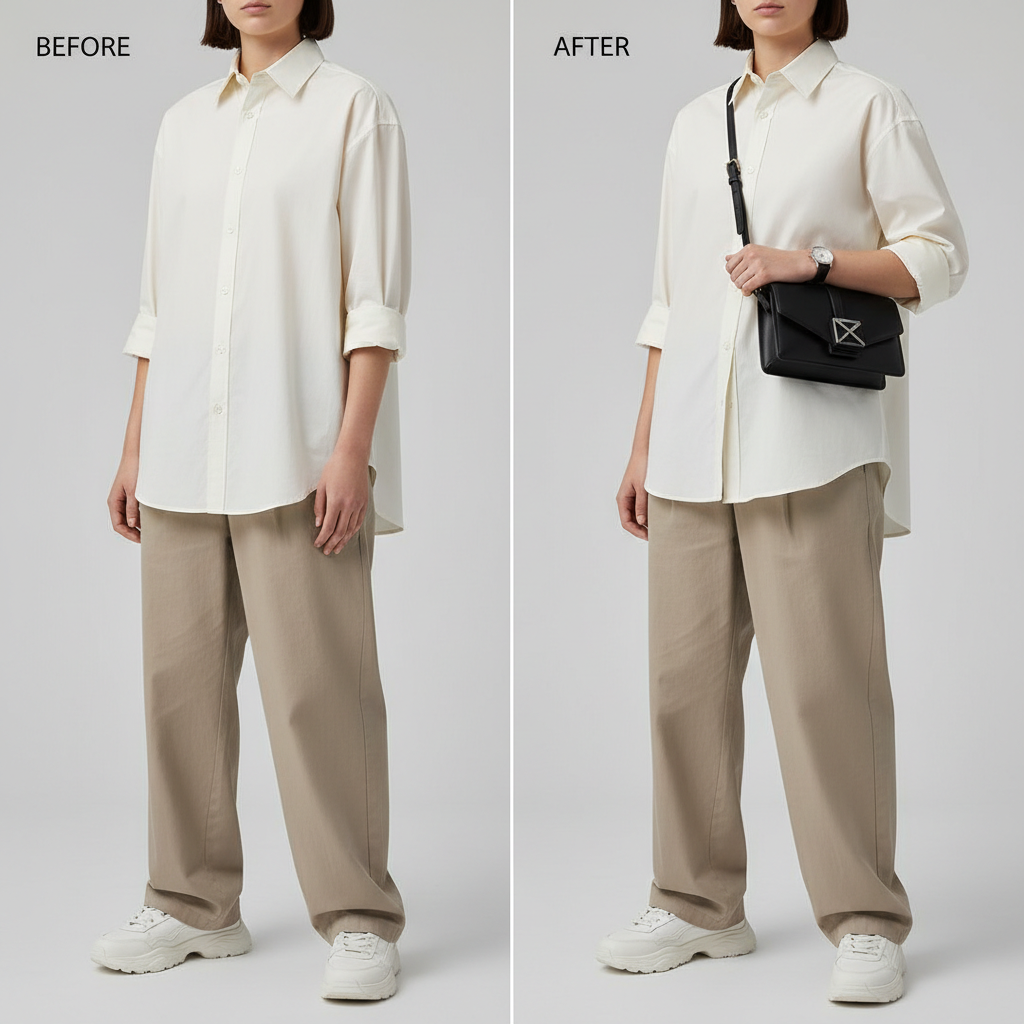
Many people over-correct by adding more “fixes” than needed. One anchor point plus one structured element tends to be enough for most casual outfits.
Common mistakes that make oversized feel sloppy
These are the traps that keep showing up, especially when you’re trying to dress fast.
- Oversized head-to-toe in the same fabric: matching sweats can look great, but if everything is equally soft and equally big, it’s easy to drift into sleepwear.
- Ignoring sleeve and pant length: too-long sleeves hiding hands and pants pooling at shoes often reads “borrowed,” not “relaxed.”
- Using big layers to hide discomfort: it’s understandable, but adding more volume everywhere can increase self-consciousness. A cleaner base layer often feels better.
- Choosing the wrong underwear lines: bulky seams can distort drape, especially under thin knits.
Also, if you’re using oversized fits for comfort because of sensory issues or skin sensitivity, that’s valid. You can still apply the same balance ideas by choosing soft fabrics with cleaner hems, and if discomfort relates to health concerns, it may be worth discussing with a qualified professional.
Conclusion: the “balanced oversized” look is a repeatable system
Balanced oversized style isn’t a mystery trend, it’s a handful of choices you can repeat: one hero volume piece, one clean companion piece, one anchor point, and a deliberate shoe. Once you see it that way, oversized outfits styling becomes less about trial-and-error and more like a personal formula.
Pick one oversized item you already own, try the 5-minute steps, then take a quick photo to compare. If you only change one thing today, make it an anchor point, a half-tuck or pushed sleeves usually delivers the fastest win.
FAQ
How do I wear oversized clothes without looking bigger?
Keep one area clean: a tucked waist, a slimmer bottom, or a sharper neckline. The goal is contrast, not hiding in extra fabric.
Can I wear oversized top and bottom together?
Yes, but it typically needs structure somewhere, like a defined shoulder blazer, a belt, or a strong shoe. Without that, it can read unintentional.
What shoes work best with wide-leg pants?
Sleek sneakers, loafers, and heeled boots often create a clean line. Chunkier shoes can work too, just watch the hem so it doesn’t pool and shorten the leg.
Should oversized pieces be bought in a larger size?
Not always. Many brands already cut “oversized” patterns, sizing up can shift shoulder seams and sleeve length in a way that looks accidental.
How do I style an oversized hoodie without looking sloppy?
Pair it with a cleaner bottom like slim joggers or shorts, then add one intentional element such as a structured jacket, a cap, or a crisp sneaker.
What’s the easiest way to define the waist with oversized items?
A half-tuck, a cropped layer, or high-rise bottoms usually feels more natural than a tight belt. Belts work best when the fabric has some structure.
How do I make oversized outfits look work-appropriate?
Choose tailoring fabrics, keep the base simple, and limit volume to one piece. A blazer with a defined shoulder and straight-leg pants is a safe place to start.
If you’re building a closet around relaxed silhouettes, it helps to plan a few “go-to” formulas and shop for supporting basics, clean tees, straight jeans, structured bags, and shoes that match your typical hems, because those are what make oversized outfits feel easy on busy mornings.