
women faux leather biker jacket shopping often gets stuck on the same questions: Will it look cheap, will it peel, and will the fit feel stiff across the shoulders. The good news is you can usually tell the difference between a “one-season” jacket and a genuinely wearable staple with a few quick checks.
This guide breaks down what matters in real life—material feel, hardware, lining, and how the jacket sits when you move. I’ll also share practical sizing tips, styling ideas that don’t feel costume-y, and care steps that help faux leather stay presentable longer.
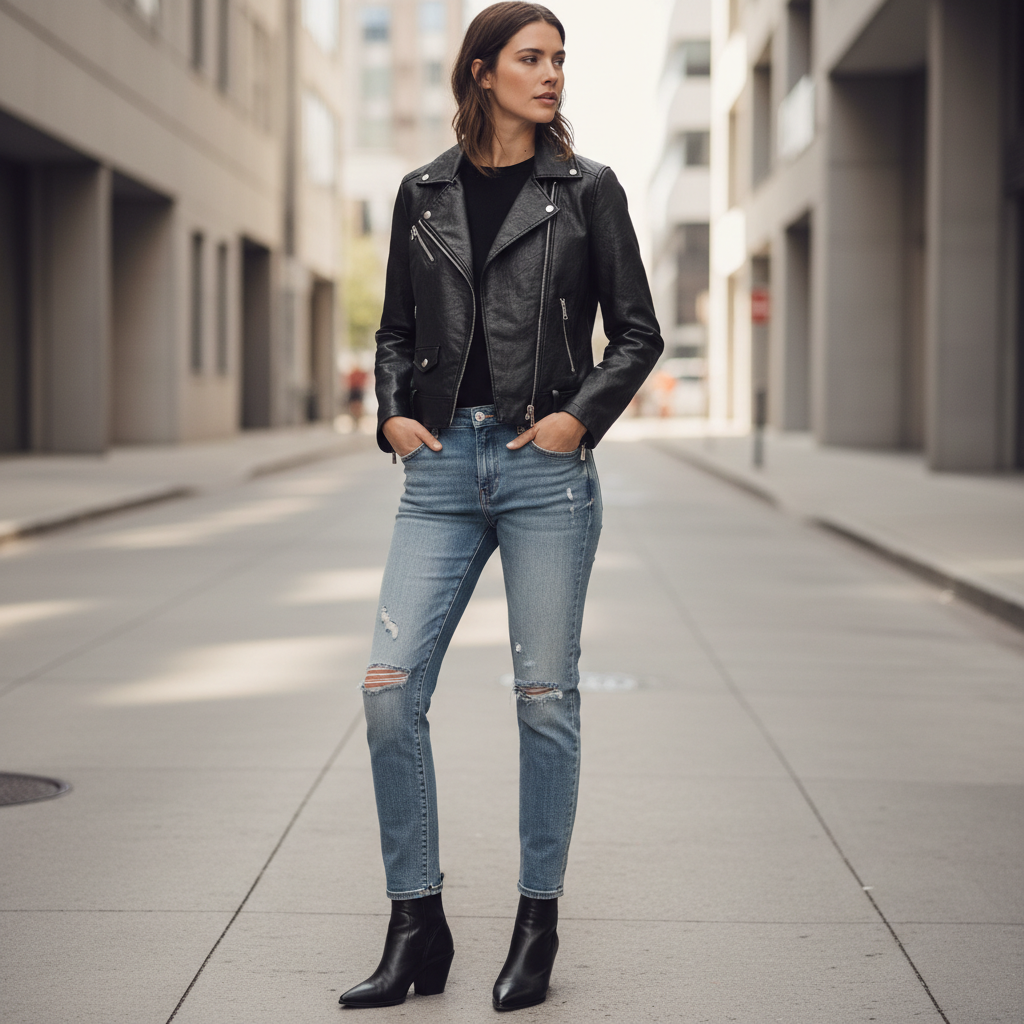
One common misconception: “faux leather” is one thing. It isn’t. Quality varies a lot by base fabric, coating, and construction, so price alone won’t save you, and neither will a brand name if the details aren’t there.
What makes a faux leather biker jacket look expensive
A biker jacket has a lot going on—zippers, lapels, seams—so weak materials show fast. If you want that structured, polished look, these are the tells worth checking before you commit.
- Surface grain and sheen: A slightly matte or satin finish usually reads more “real” than high gloss. Over-shiny coating can look plastic under indoor lighting.
- Hand feel (flex): Better faux leather bends without loud creasing. If it folds like cardboard on the hanger, it often feels restrictive on-body.
- Seam work: Look for clean topstitching, consistent spacing, and no puckering around curves like the lapel and armhole.
- Hardware weight: Zippers and snaps should feel sturdy and glide smoothly. Lightweight zipper tape can ripple and look wavy.
- Lining and edge finishing: A full lining (not just partial) improves comfort and helps the jacket keep shape.
According to the U.S. Federal Trade Commission (FTC), leather and imitation leather terms can be used in different ways depending on labeling and marketing, so it’s smart to read product descriptions carefully rather than relying on the title alone.
Types of faux leather (and which one fits your lifestyle)
When you see “PU” or “vegan leather,” you’re usually looking at a coated material built on a fabric backing. The performance differences show up in breathability, drape, and how the surface ages.
Quick comparison table
| Material (common label) | What it tends to feel like | Best for | Watch-outs |
|---|---|---|---|
| PU (polyurethane) | Softer, more flexible | Everyday wear, lighter layers | Lower-grade PU may crack/peel with heat and friction |
| PVC (vinyl) | Stiffer, shinier | Statement looks, rain-prone days | Can feel less breathable, may crease more |
| Microfiber “vegan leather” | More suede-like or soft-grain | Elevated outfits, closer-to-leather look | Often pricier, still needs careful storage |
If you run warm, prioritize lighter linings and a softer hand feel. If you want a sharper, more structured silhouette, a slightly firmer material can work, but it should still move with you at the shoulders and elbows.
Fit check: a fast self-test before you keep the tags off
The biker silhouette is meant to feel a bit sharp, not suffocating. A women faux leather biker jacket should let you sit, drive, and reach forward without the collar choking you or the sleeves riding halfway up your forearm.
- Shoulders: Seam should land near your shoulder edge. If it drops far, the jacket can look sloppy; if it sits high, arm movement gets tight.
- Collar and lapel: When zipped partway, it shouldn’t push into your neck. If it does, sizing up or choosing a softer lapel helps.
- Chest and zip: Zip should close without pulling into an “X” wrinkle across the bust.
- Sleeve length: Ideally ends around wrist bone. Too long looks bulky; too short breaks the biker vibe.
- Hem placement: Classic biker hits at hip. Cropped versions hit higher and emphasize waist; longer cuts feel more coat-like.
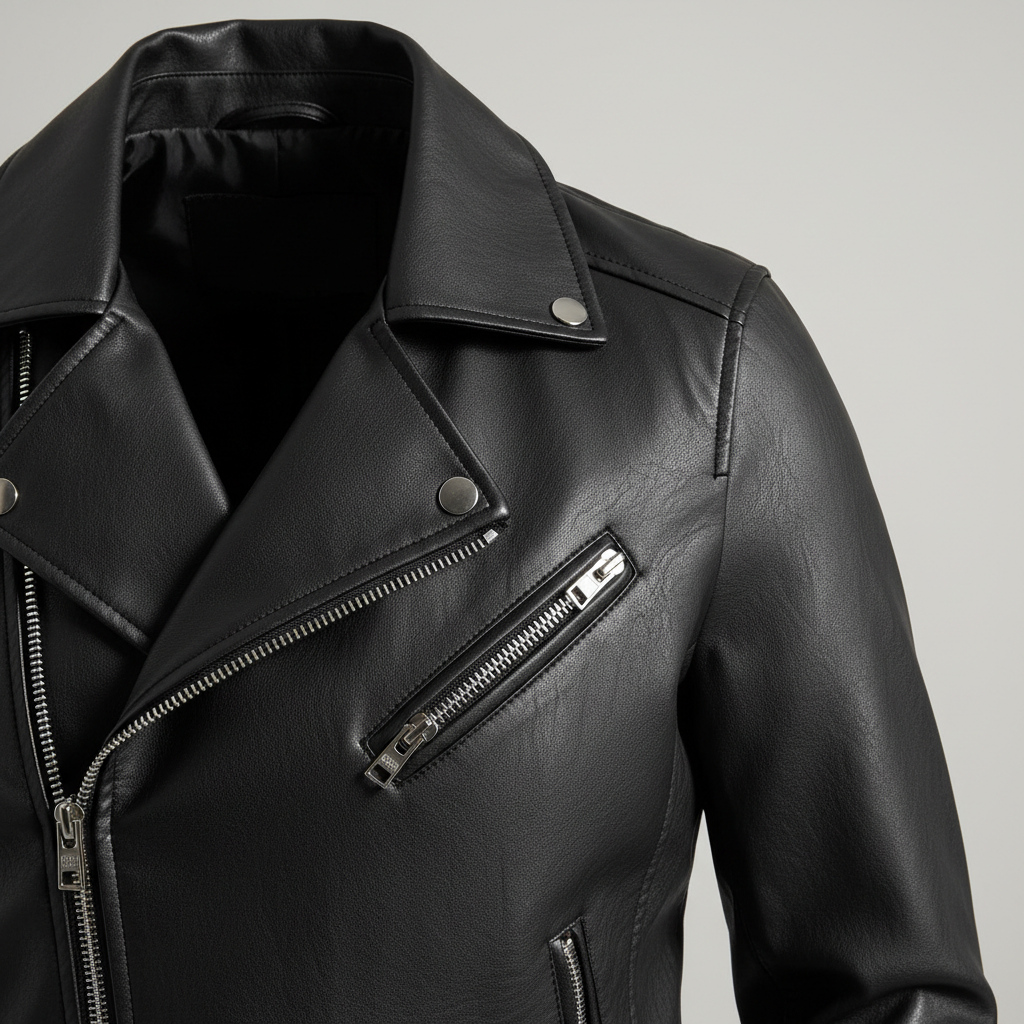
Fit tip that saves returns: try it on over what you’ll actually wear most. If you live in hoodies and chunky knits, buying a skin-tight biker jacket usually means it sits in the closet.
Warmth, comfort, and weather: what faux leather can (and can’t) do
Faux leather blocks wind fairly well, but warmth depends on lining and what you layer underneath. Many jackets look substantial yet have minimal insulation, which is fine for fall, less fun for real winter commutes.
- For fall and mild winter: Look for a full lining, room for a sweater, and a higher collar option.
- For rainy days: Faux leather can handle light rain, but water can seep through seams and zipper areas. Pat dry and air out after.
- For freezing temps: Consider a biker-inspired coat or add a warm mid-layer. If you need serious cold protection, a specialist outerwear piece may work better.
According to the U.S. Consumer Product Safety Commission (CPSC), safe clothing use includes keeping outerwear away from open flames and high heat sources, which matters because coated materials may deform or discolor near heat.
How to style a biker jacket without feeling “overdone”
The easiest win is contrast. A biker shape is sharp by design, so pairing it with softer or simpler pieces keeps the outfit modern instead of theatrical.
Outfit formulas that work in most closets
- Weekend casual: tee, straight jeans, sneakers, women faux leather biker jacket on top.
- Office-leaning (if your dress code allows): fine-gauge knit, tailored pants, loafers, minimal jewelry.
- Date night: slip dress or knit dress, ankle boots, structured mini bag.
- Edgy but clean: monochrome base layer, belt, and keep hardware minimal (avoid too many buckles at once).
If you’re petite, cropped cuts usually sharpen proportions. If you want more coverage at the hip, look for a slightly longer hem but keep the shoulders fitted so it doesn’t read boxy.
Care and storage: prevent peeling, cracking, and weird creases
The most common complaint is surface damage over time, and a lot of it comes from heat, friction, and bad storage rather than “bad luck.” A women faux leather biker jacket can stay smooth longer if you treat it like a coated fabric, not like denim.
- Hang it right: Use a wide, structured hanger so shoulder areas keep shape.
- Avoid heat: Don’t leave it in a hot car, near radiators, or in direct sun for long periods.
- Clean gently: Damp cloth for light dirt, then dry with a soft towel. Skip harsh solvents unless the care label specifically allows it.
- Let it breathe: Avoid plastic garment bags for long storage. A breathable cover helps reduce moisture trapping.
- Reduce friction zones: Heavy crossbody straps can rub the finish at the shoulder; rotating bags helps.
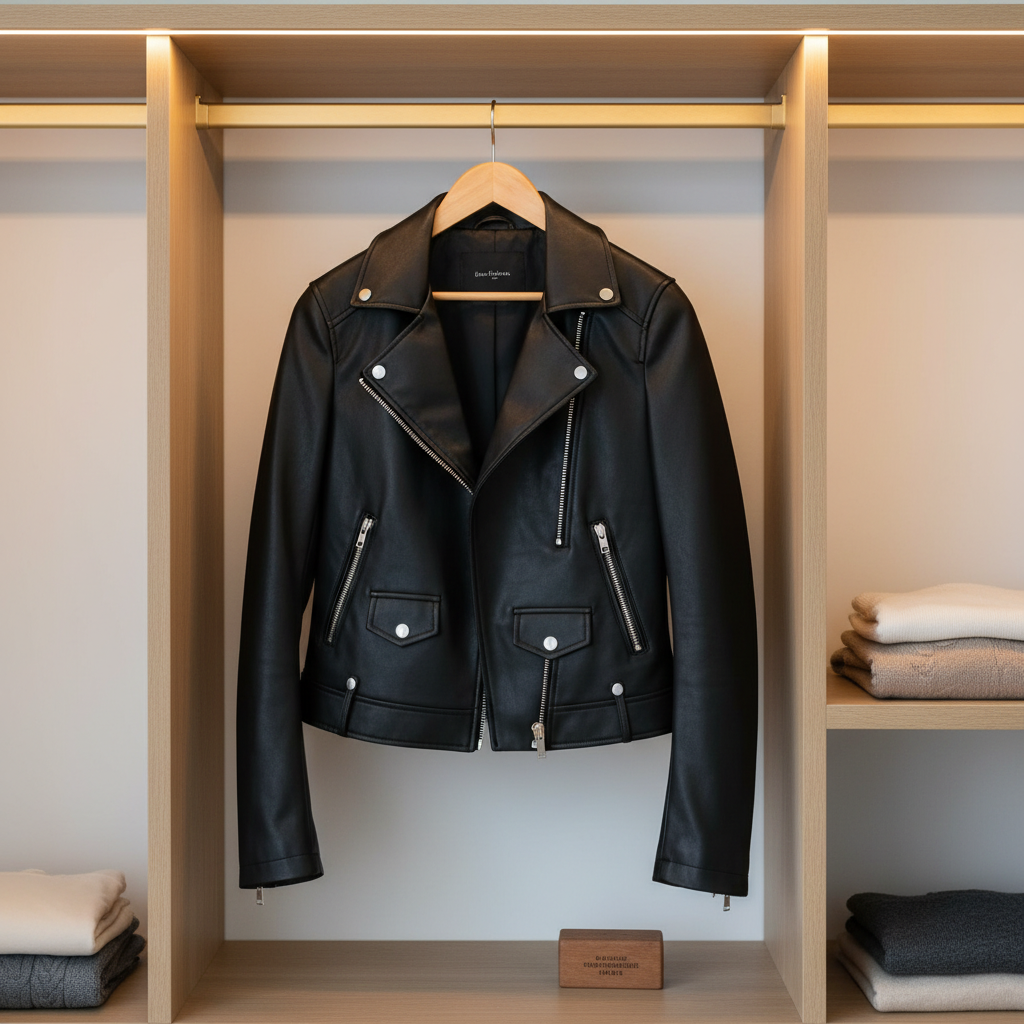
Before using any conditioner or protectant, spot-test inside the hem. Some coatings react and get sticky or blotchy, and it’s not something you want to discover on the front panel.
Buying checklist: choose the right jacket in 10 minutes
If you’re browsing online, you can’t “feel” the material, so you need a sharper filter. Use this list like a quick pre-purchase routine, especially when product photos look a little too perfect.
- Read the material line: Look for PU/PVC/microfiber and check if the backing fabric is listed.
- Zoom in on stitching and zipper tape: Wavy zipper lines often mean weaker structure.
- Check lining details: Full lining and sleeve lining usually mean easier layering.
- Review size notes: If many buyers mention tight arms or narrow shoulders, consider sizing up or choosing a different cut.
- Return policy: For faux leather, fit is everything—make sure returns are realistic for you.
Conclusion: pick the jacket you’ll actually wear
A women faux leather biker jacket earns its spot when it fits your daily layers, the finish looks believable in normal lighting, and the hardware and seams feel solid. If you do one thing today, do the movement test and the close-up detail check before committing, those two steps prevent most regrets.
If you’re deciding between two options, choose the one that feels easier to style with what you already own, because the “perfect” jacket that doesn’t match your life is still a missed purchase.
FAQ
How do I know if a women faux leather biker jacket will peel?
You can’t guarantee it from photos, but you can lower the risk by avoiding overly glossy finishes, checking for consistent coating in close-ups, and reading care notes. Heat and friction often accelerate peeling, so storage habits matter too.
Should a biker jacket be tight or relaxed?
It should feel structured but not restrictive. If you can’t comfortably hug yourself or reach forward without pulling at the upper back, that’s usually too tight for real-world wear.
Is faux leather warm enough for winter in the U.S.?
In many places it works for fall and mild winter days, especially with a sweater. For colder climates, you may want a warmer mid-layer or choose a jacket with a thicker lining.
What colors are most versatile besides black?
Dark brown, espresso, and charcoal are easy to mix and often look “richer” than bright colors in faux finishes. If you wear lots of denim, brown can be a nice change without being hard to match.
Can I wear a faux leather biker jacket in the rain?
Light rain is usually fine, but don’t soak it. Dry it gently, keep it away from direct heat, and let it air out; if it stays damp in a closed space, odors and surface issues can show up.
How do I clean makeup marks on the collar?
A soft damp cloth with a mild soap solution often works, then wipe with clean water and dry. If the stain won’t lift, check the care label before trying stronger cleaners, because some coatings can discolor.
What should I look for if I have broad shoulders?
Prioritize stretch or a softer hand feel, and pay attention to shoulder seam placement. Many people do better with a slightly roomier cut and clean lines rather than extra epaulets or bulky padding.
If you’re trying to find a women faux leather biker jacket that looks polished in everyday lighting and fits your actual layering habits, it can help to shortlist a few silhouettes and compare details side by side, especially lining, hardware, and shoulder fit, before you order.