
How to get glowing skin naturally usually comes down to a few boring basics done consistently: protect your skin barrier, keep inflammation low, and stop chasing harsh “quick fixes” that leave you flaky and reactive.
If you feel like your skin looks tired no matter what serum you buy, you’re not alone, a lot of “glow” advice skips the unglamorous parts like sunscreen, sleep, and gentle cleansing. And honestly, those are the parts that make the expensive stuff work better.
This guide breaks it into a simple system you can follow, how to figure out what’s dulling your skin, what to do in the morning vs at night, and where natural remedies help versus where they often disappoint. You’ll also get a quick checklist and a starter routine you can actually maintain.
What “glowing skin” really means (and what it doesn’t)
Glowing skin isn’t the same as oily skin, and it’s not “poreless” skin either. Most of the time, it’s a mix of even tone, smooth texture, and a healthy light reflection from a hydrated outer layer.
What tends to create the glow effect in real life:
- Strong barrier: the outer layer holds water, looks plumper, and stings less when you apply products.
- Balanced exfoliation: dead skin sheds normally, without rawness or tightness.
- Lower redness: less irritation means less “dull + blotchy” appearance.
- Daily UV protection: prevents new dark spots and collagen breakdown that flatten radiance over time.
Why skin looks dull: the most common causes
Before you add anything new, it helps to name the problem. Dullness can mean dryness, slow cell turnover, pigmentation, or irritation, and those need different moves.
- Dehydration and barrier damage: tight feeling after cleansing, makeup looks patchy, products sting.
- Too much exfoliation: “smooth” for a day, then red, shiny, flaky, and sensitive.
- Sun exposure: gradual dark spots, uneven tone, and a rougher look over months.
- Congestion: tiny bumps, closed comedones, texture that diffuses light.
- Lifestyle load: sleep debt, high stress, alcohol, low protein intake, all can show up in skin tone.
According to the American Academy of Dermatology (AAD), daily sunscreen is a core habit for preventing sun damage, including discoloration and premature skin aging, both of which commonly reduce “radiance.”
A quick self-check: which type of “dull” are you dealing with?
Use this quick table to pick your starting point. You can have more than one, but choose the top one or two so you don’t overhaul everything at once.
| What you notice | Likely issue | What usually helps |
|---|---|---|
| Tight after washing, flaky around nose/mouth | Dehydration/barrier stress | Gentle cleanser, richer moisturizer, fewer actives |
| Redness, burning with products, “glassy” shine | Over-exfoliation/irritation | Stop acids/retinoids briefly, barrier repair, sunscreen |
| Dark spots, uneven tone, glow only with highlighter | Sun + pigmentation | Daily SPF, vitamin C, patience and consistency |
| Small bumps, rough texture, makeup sits weird | Congestion | Salicylic acid 1–3x/week, non-comedogenic moisturizer |
The natural glow routine: simple AM and PM steps
How to get glowing skin naturally gets easier when your routine stops changing every week. Aim for “calm and consistent” for 4–6 weeks before you judge results, especially for tone and texture.
Morning (AM): protect and brighten
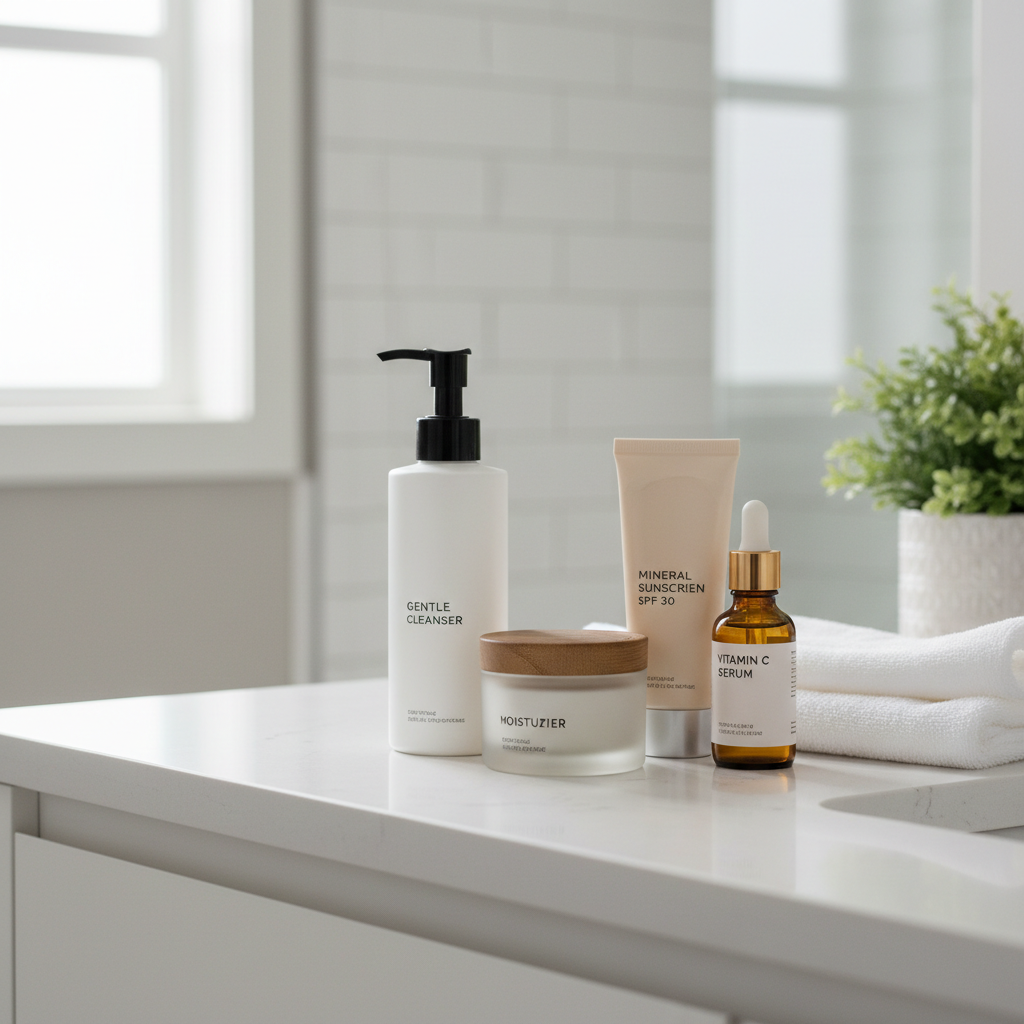
- Gentle cleanse (or just rinse if you’re dry/sensitive): avoid squeaky-clean feeling.
- Antioxidant step (optional): vitamin C can support brightness, but pick one that doesn’t sting, start 3–4 mornings/week.
- Moisturizer: choose based on comfort, not trend, a light lotion can be enough for oily skin.
- Sunscreen SPF 30+: broad-spectrum every day, even when it’s cloudy, this is non-negotiable for long-term glow.
Night (PM): repair and smooth
- Cleanse: remove sunscreen and makeup thoroughly, but keep it gentle.
- Target step (pick one):
- For texture: mild AHA (like lactic acid) 1–2 nights/week.
- For bumps/clogging: BHA (salicylic acid) 1–3 nights/week.
- For fine lines + tone: a retinoid can help, but it’s not “natural” in the strict sense, still, many people use it as a practical option, go slow and consider professional guidance if sensitive.
- Moisturizer: apply while skin is slightly damp to reduce water loss.
According to the Centers for Disease Control and Prevention (CDC), sun protection includes seeking shade, wearing protective clothing, and using broad-spectrum sunscreen, skincare products won’t outwork daily UV exposure.
Food, hydration, and habits that show up on your face
Topicals matter, but if your goal is a natural glow, your baseline health habits often decide whether your skin looks “alive” or just “fine.” This part is slower, but it’s also the part people notice.
- Protein at most meals: skin is built from amino acids, many people under-eat protein without realizing it.
- Fiber and colorful plants: supports gut regularity and provides antioxidants, think berries, leafy greens, tomatoes.
- Hydration: drink enough that your urine is pale yellow most of the day, overdoing water rarely creates glow if your barrier is damaged.
- Sleep consistency: a stable schedule often matters more than a “perfect” number of hours on one night.
- Alcohol and ultra-processed foods: many people notice puffiness, redness, or dullness when these ramp up, it’s not moral, it’s just a pattern.

Natural ingredients: what tends to help vs what to be careful with
“Natural” can be great, but natural can also mean irritating, especially with DIY masks. If your skin is already dull because it’s inflamed, the wrong home remedy makes it worse fast.
Often worth considering
- Colloidal oatmeal: soothing for dryness and sensitivity, look for it in cleansers or moisturizers.
- Aloe vera: can feel calming, patch test first because some formulas include fragrance or alcohol.
- Green tea (topical): antioxidant support, commonly found in gentle serums.
- Honey (as a wash-off mask): can be hydrating, but keep it short and avoid if you’re acne-prone and it seems to clog you.
Common “natural” ideas that backfire
- Lemon juice: too acidic and can increase irritation and sun sensitivity.
- Harsh scrubs (sugar, coffee, walnut): can cause micro-tears and redness.
- Essential oils: frequent trigger for contact dermatitis, especially on the face.
According to the U.S. Food and Drug Administration (FDA), some people experience adverse reactions to cosmetics and skin products, so patch testing and stopping use if irritation occurs is a sensible baseline.
A 14-day practical plan (so you don’t overthink it)
If you want a cleaner path to results, commit to a short plan. The goal is fewer variables, not more products.
- Days 1–3: gentle cleanser, moisturizer, SPF. No exfoliation. Let your skin settle.
- Days 4–7: add one brightening step in the morning (like a gentle vitamin C) or one exfoliation night (not both yet).
- Days 8–14: keep the basics daily, add exfoliation up to 2 nights/week if your skin stays calm, otherwise scale back.
Key point: if your skin starts stinging, peeling, or getting red, your “glow” plan has become an irritation plan, pull back for a week and rebuild.
When to get professional help (and why it’s not overreacting)
If you’re doing the basics and still feel stuck, it may not be a willpower issue. Some conditions look like dullness but need different care.
- Persistent acne, especially cystic or painful breakouts
- Melasma or worsening dark patches, often triggered by sun or hormones
- Burning, scaling, or rash that doesn’t improve after stopping actives
- Sudden changes in pigmentation or new spots that concern you
A dermatologist can help confirm what’s going on and suggest options that match your skin type and medical history. If you’re pregnant, breastfeeding, or managing a skin condition, it’s smart to ask a clinician before starting new actives.
Conclusion: keep it simple, protect the barrier, and stay consistent
How to get glowing skin naturally is less about secret ingredients and more about repeating the small stuff, gentle cleansing, steady moisture, and daily sunscreen, then adding one targeted step only when your skin is calm.
If you want one action to start today, pick an SPF you’ll actually wear daily, then simplify your night routine for two weeks so your skin can recover and reflect light better. Once you see steadier texture, you’ll know exactly what’s working, and what’s just noise.