
how to choose deodorant for women usually comes down to three things that feel very personal: how much you sweat, how sensitive your skin feels, and what kind of scent (or no scent) you can actually live with all day.
If you’ve ever bought a “clean” stick that quit by noon, or a clinical-strength option that left your underarms angry, you’re not alone. Deodorant is one of those categories where marketing sounds confident, but real-life results vary a lot by body chemistry, hormones, fabric choices, and even weather.

This guide breaks the decision into practical steps: deodorant vs. antiperspirant, ingredient red flags for sensitive skin, scent strategy, and how to test without wasting money. You’ll also get a simple comparison table and a quick checklist to narrow choices fast.
Deodorant vs. Antiperspirant: pick the job you need
The biggest confusion is assuming every underarm product does the same thing. It doesn’t, and choosing wrong is why many “great reviews” still fail for you.
- Deodorant targets odor by reducing odor-causing bacteria and masking smell with fragrance. It does not stop sweat.
- Antiperspirant reduces sweat by temporarily blocking sweat ducts with aluminum salts, which can also reduce odor as a side effect.
- Deodorant + antiperspirant (many mainstream sticks) does both.
According to the U.S. Food and Drug Administration (FDA), antiperspirants are regulated as over-the-counter drugs because they affect how the body functions (sweat reduction). Deodorants are regulated as cosmetics.
Quick decision: if sweat is the main problem, start with an antiperspirant. If odor is the main problem and you don’t mind sweating, a deodorant may be enough.
Know your “sweat profile” before you shop
When people ask how to choose deodorant for women, what they often mean is “why does it work for my friend but not me?” A good answer starts with your baseline.
Common patterns (and what they suggest)
- Light sweater, odor shows up late day: deodorant, gel, or spray may be sufficient.
- Moderate sweat + noticeable odor by midday: combo product or stronger deodorant with better odor control ingredients.
- Heavy sweating (stress, heat, workouts) with dampness: antiperspirant, possibly “clinical strength,” plus application timing matters.
- Odor spikes around cycle, postpartum, or perimenopause: you may need stronger odor control during certain weeks, not all month.
If you suspect excessive sweating that interferes with daily life, it may be worth asking a clinician about hyperhidrosis treatments rather than only swapping products.
Ingredients that matter (and which ones to be cautious with)
Reading the label feels tedious, but it’s where you avoid the most common “why am I irritated?” mistake. Your goal is not “all natural,” it’s tolerable + effective for your skin.
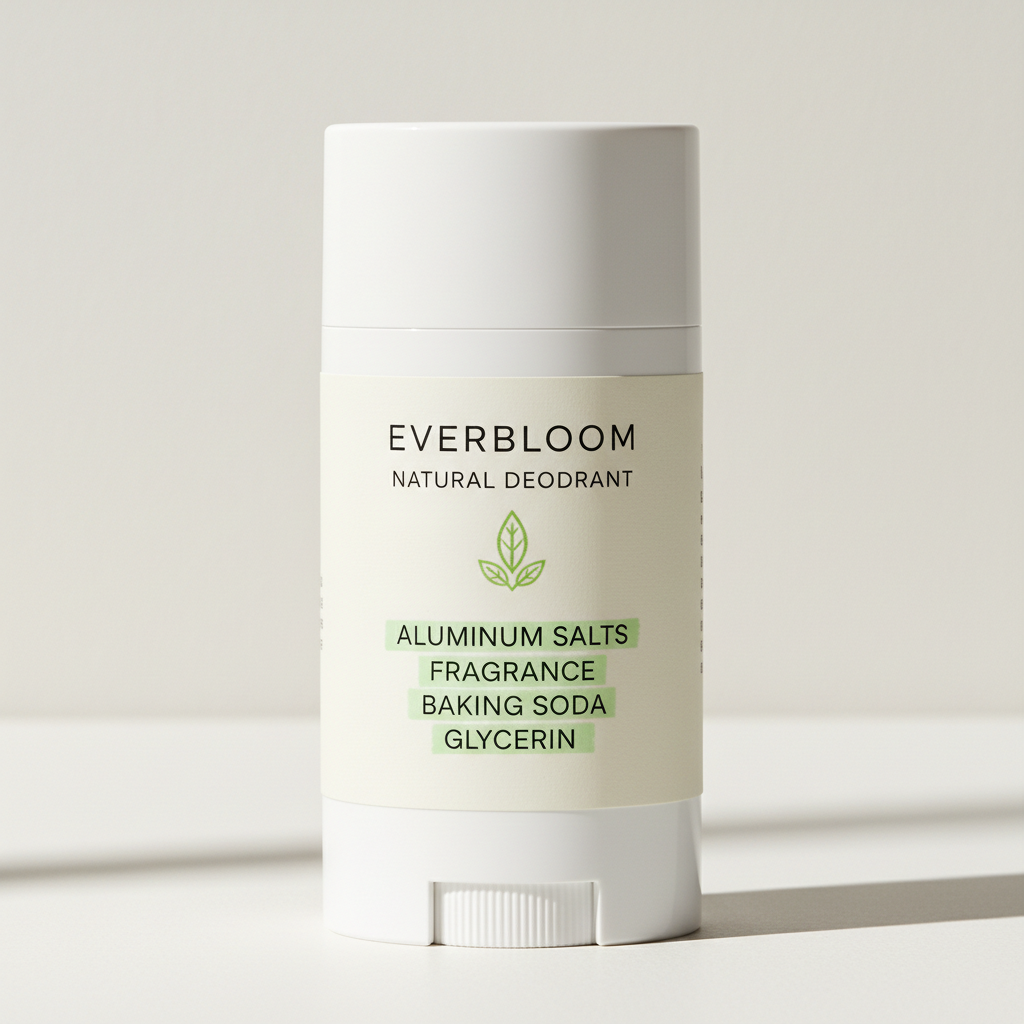
If you need sweat control
- Aluminum salts (like aluminum zirconium tetrachlorohydrex gly) are the workhorse in antiperspirants.
Some people prefer to avoid aluminum for personal reasons; if you do, set expectations that you may still sweat and you’ll be leaning harder on odor-control strategies.
If you’re odor-prone
- Antimicrobial or odor-neutralizing ingredients can help (specific ingredients vary by brand).
- Fragrance can cover odor, but it can also clash with perfume or trigger sensitivity for some.
If you have sensitive underarms
- Be cautious with baking soda (sodium bicarbonate): many people tolerate it, but irritation and rash are common enough that it’s worth watching for.
- Fragrance and essential oils are frequent irritants for reactive skin.
- Look for glycerin, aloe, or other soothing bases and “fragrance-free” if you’re easily irritated.
According to the American Academy of Dermatology (AAD), fragrance is a common cause of contact dermatitis, and underarm skin can be especially reactive due to friction and shaving. If you’ve had underarm rashes before, patch testing a new product is a smart move.
Match the format to your routine (stick, gel, spray, cream)
Format isn’t just preference, it changes how evenly you apply and how it feels under clothes.
- Solid stick: easy, low mess, good for daily use, can leave residue on dark fabrics depending on formula.
- Gel: often feels “cleaner” going on, but needs dry time or it can feel tacky.
- Spray: quick coverage, helpful if you hate underarm drag, but inhalation sensitivity can be a concern for some people.
- Cream: good for targeted application and some sensitive-skin formulas, but you’ll use your fingers and consistency varies.
Practical tip: if you wear a lot of black, look for “clear” formulas and give any product 60–90 seconds to set before getting dressed.
Use this table to choose faster (by goal and skin type)
If you’re stuck between options, the table below usually gets you to a short list without overthinking.
| What you want | Better starting point | What to look for on label | Watch-outs |
|---|---|---|---|
| Less sweat in heat/stress | Antiperspirant | Aluminum salts, “antiperspirant” | Can sting after shaving, may need night application |
| Odor control but okay with sweat | Deodorant | Odor neutralizers, “deodorant,” fragrance-free if needed | Baking soda and heavy fragrance can irritate |
| Sensitive underarms | Gentle deodorant or gentle antiperspirant | Fragrance-free, soothing base ingredients | Essential oils, baking soda, post-shave application |
| Workout days | Stronger odor control + smart timing | Long-wear claims, quick-dry format | Layering too much can build residue |
| Minimal residue on clothes | Clear gel or fast-dry spray | “Clear,” “no white marks” | Sprays may bother airways, gels need dry time |
How to test a new deodorant without wasting weeks
A lot of “this didn’t work” comes from testing in the wrong conditions. Here’s a more realistic way to evaluate, especially if you’re figuring out how to choose deodorant for women with changing hormones or a new workout routine.
A simple 7–10 day test plan
- Days 1–2: patch test on one underarm if you’re sensitive, and avoid applying right after shaving.
- Days 3–5: use it on normal workdays, note odor timing, dampness, and any itching.
- Days 6–7: test a higher-sweat day (commute, workout, hot weather) to see the ceiling.
- Days 8–10 (optional): if it’s “almost there,” adjust timing or amount before you declare failure.
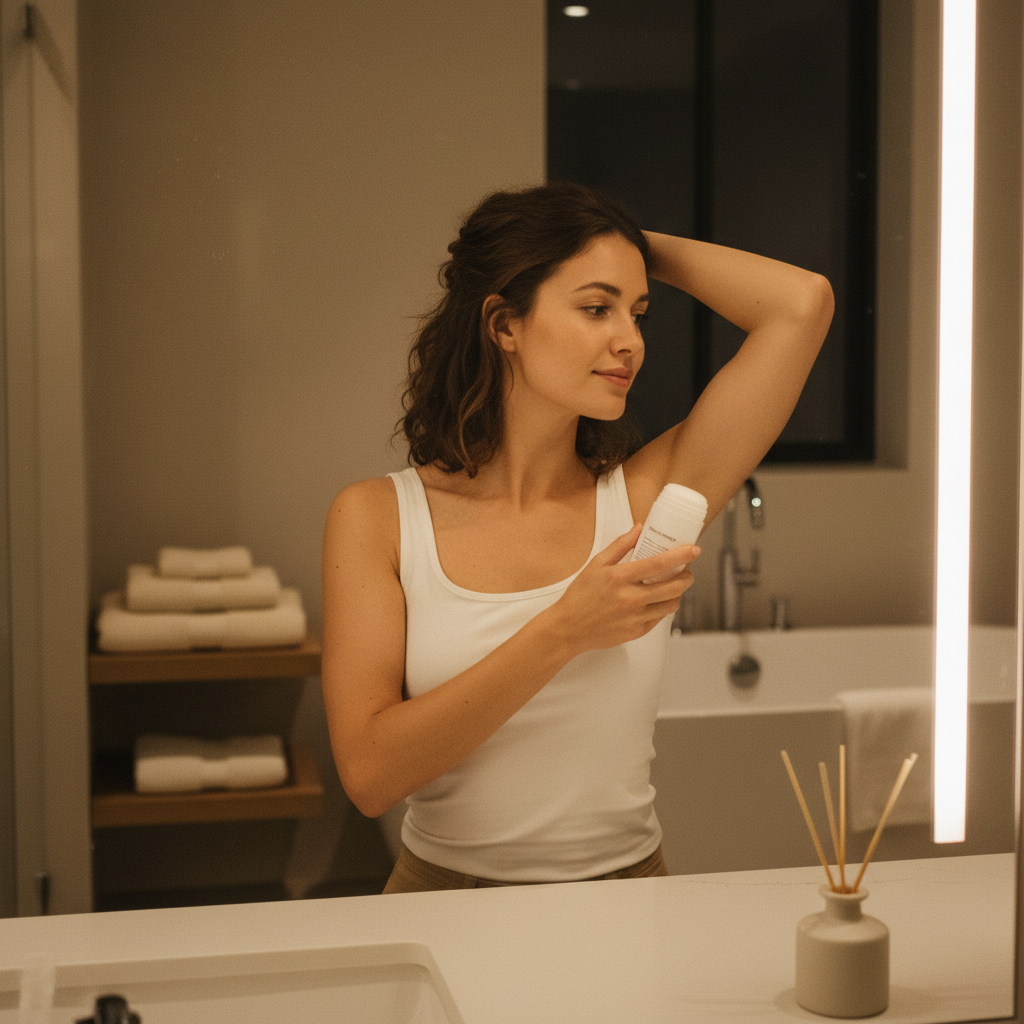
Key point: antiperspirants often perform better when applied at night on dry skin, because sweat is lower and the active ingredient can set more effectively.
If odor sticks to clothing even with a good product, the issue may be fabric buildup. Washing workout tops with a sport detergent or occasional enzyme wash can help, and it’s often more effective than switching sticks again.
Common mistakes that make any deodorant “fail”
- Applying on damp skin: product slides, then performance drops.
- Putting it on right after shaving: micro-cuts can sting, irritation increases.
- Over-layering: more isn’t always better, it can create residue that traps odor.
- Switching too fast: you never learn whether timing, format, or ingredients were the real issue.
- Ignoring triggers: stress sweat and spicy food can shift odor, so “it stopped working” may be situational.
Also, “natural” and “non-toxic” are marketing terms that can mean different things across brands. If your skin feels raw, the label philosophy matters less than stopping the irritant.
When it’s worth getting professional input
Most underarm issues are solvable with better product fit and routine tweaks, but a few situations deserve an outside opinion.
- Recurrent rash, cracking, or darkening skin that doesn’t improve after changing products.
- Severe sweating that affects work, sleep, or social life, possible hyperhidrosis.
- New strong odor change with other symptoms, which can sometimes relate to skin infection or other health factors.
In these cases, a dermatologist or primary care clinician can help you rule out dermatitis, infection, or recommend prescription-strength options. If you’re pregnant, postpartum, or managing a medical condition, it’s reasonable to ask what ingredients make sense for your situation.
Key takeaways (so you can choose today)
- Choose by job: sweat control points to antiperspirant, odor-only points to deodorant.
- Sensitive skin needs strategy: fragrance and baking soda are common troublemakers.
- Format changes performance: sticks, gels, sprays, creams feel different and wear differently.
- Test smart: give it 7–10 days, control for shaving and application timing.
If you want one simple next step, pick one product that matches your sweat level, then run the test plan without changing anything else. You’ll learn more in a week than in a month of random switching.
FAQ
- How do I choose between deodorant and antiperspirant for daily use?
Choose based on whether sweat bothers you. If dampness is the main issue, an antiperspirant typically fits better; if it’s mainly smell, deodorant can be enough. - Why does deodorant stop working after a few weeks?
Often it’s not “immunity,” it’s buildup on skin or clothing, seasonal heat changes, stress, or hormone shifts. Try adjusting application timing and check if your shirts hold odor. - Is aluminum in antiperspirant safe?
Many consumers use aluminum-based antiperspirants without problems, but safety questions are personal and sometimes medical. If you have concerns or skin reactions, consider discussing with a clinician and choosing what aligns with your comfort level. - What’s the best deodorant choice for sensitive underarms?
Many people do better with fragrance-free formulas and gentler bases. If baking soda causes stinging or rash, switching away from it is often helpful. - Can I use deodorant right after shaving?
It can sting because shaving can irritate skin. Waiting a few hours, or applying at night, often reduces discomfort. - How can I prevent white marks or yellow stains on clothes?
Let product dry before dressing, avoid over-applying, and consider clear gels. Yellowing can also be laundry-related, so adjusting washing habits may help. - How do I choose deodorant for women who work out a lot?
Look for long-wear odor control, pair it with breathable fabrics, and wash workout tops to remove odor-trapping residue. A stronger option on training days, gentler on rest days, can be a workable balance.
If you’re trying to narrow down options quickly, it helps to list your top two priorities such as sweat control and sensitive skin, then choose one formula and test it for a week with consistent timing. If you want a more streamlined approach, a dermatologist can recommend a shortlist based on your skin and sweat pattern, which can save time and irritation.